
What Makes You Come Alive
Part 2 of the Season of Savoring

Howard Thurman, the Black theologian and mystic who mentored Martin Luther King Jr., wrote this:
“Don’t ask what the world needs. Ask what makes you come alive, and go do it. Because what the world needs is people who have come alive.”
I’ve been thinking about this quote all week. Since I got in the van, I’ve been interacting with people who are coming alive. I wrote about some of them in my last post: The strangers by the river, the woman who blessed me every time she walked past. I thought that post was a one-and-done post, but it turns out it was just the beginning. Because this past week, I had a fascinating (to me anyway!) confluence I want to tell you about.
I’m 55 years old. This week I found myself, over the course of just a few days, in a series of one-on-one conversations with women all within a year of my own age. Five of us, all in that 54-to-56 window. And all of us are doing something completely, radically different with our lives right now than what we were doing a few years ago.
I’m living out of a tricked-out Toyota Sienna (my next post will be about the kitchen!) and driving around the continent.
One of these women just bought her first house. After a lifetime of moving, of shared spaces, of not-quite-settling down, she has a house and yard of her own for the first time. She is planting things.
One of these women left the life she had built in one state to move back to her family home, to help care for the land and for her parents and to help raise her nephew in a multigenerational household. She chose this on purpose. It is beautiful to watch.
One of these women is retiring. Not retiring TO something specific, at least not yet. She is retiring INTO the question of what comes next. She’s done the work. She is claiming the time.
And one of these women has given a sacred No. Someone asked her to give more of herself, to a very worthy cause, and she looked at the request and looked at her life and said no. Not because she doesn’t care, but because she has decided her own care is no longer optional. She wants to have time for herself in the next chapter.
Five women. Same age bracket. Five utterly different ways to come alive. And none of us is wrong.
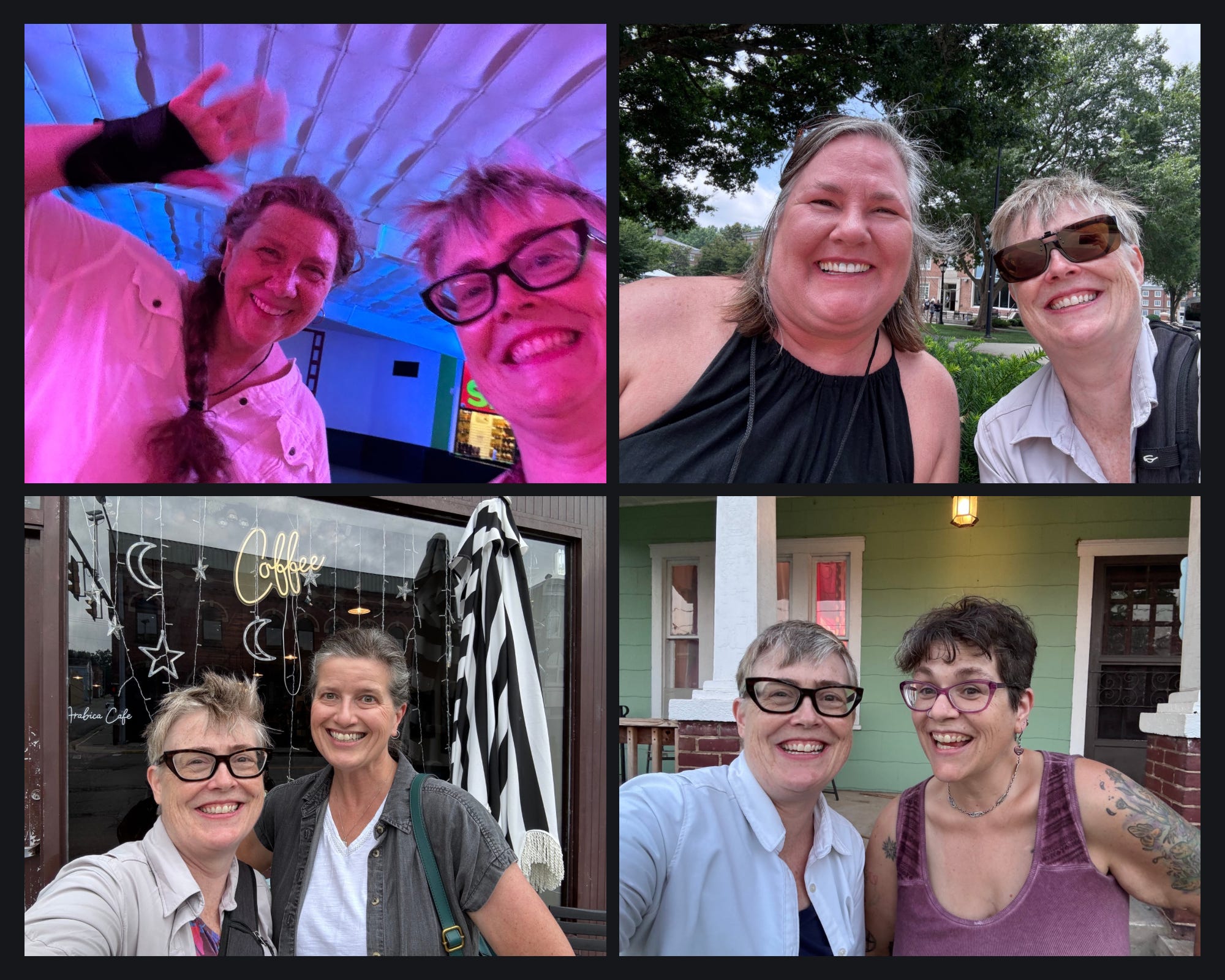
Friends, this is SO NEW.
Women couldn’t even have credit cards in our own names in the United States until 1974. That’s only 51 years ago. The Equal Credit Opportunity Act became law when I was three years old. My mother was 26! The majority of the people I know who are reading this were already alive when a woman needed her husband’s signature to open a checking account.
The idea that a woman can decide for herself, freely and without asking permission, what her fifties are going to look like is not centuries old. It’s not even one century old. It’s our lifetime! For the first time in generations, some of us — in some places, with some privileges — can make these choices. And so many of us are choosing to come alive in so many different, creative, fantastic ways.
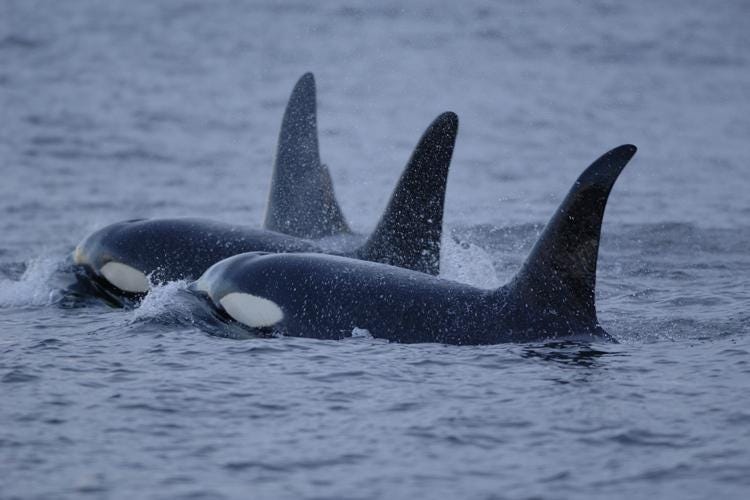
But the awesome doesn’t stop there. There’s something really remarkable about the age we’re talking about. It turns out, human beings are one of a very small number of species in which females live for decades past our reproductive years. Most female mammals reproduce until death. We don’t. We stop having babies in our forties or fifties and then — in the great sweep of evolutionary time — we usually live on for decades. Only humans and some types of whale do this!
Scientists have a name for the idea that explains why: the grandmother hypothesis. It was first outlined in 1952 by British biologist Peter Medawar. More recently, anthropologist Kristen Hawkes at the University of Utah has spent decades building the case for it through fieldwork with the Hadza people of Tanzania. What Hawkes and her colleagues have found is that post-reproductive women are highly productive foragers — actually gathering more food, particularly hard-to-obtain tubers, than younger women could, while also caring for young children. Grandmothers, in other words, are feeding the community.
And research has continued to build: a 2024 study in Nature of five toothed whale species that go through menopause (killer whales, beluga whales, narwhals, short-finned pilot whales, and false killer whales) found evidence supporting the same pattern in these long-lived, deeply social species.
The essence of the hypothesis is this: human females evolved to live long past our fertile years because we matter. Because older women, freed from immediate childbearing, contribute knowledge and labor and stability and care that help our entire communities survive and thrive. We aren’t extra. We aren’t supposed to disappear, to ride off into the sunset, at menopause. This life stage exists because it was — is — necessary.
Which means that the women I’ve been talking to this week aren’t doing something anomalous. And neither is the woman in her seventies who got her first tattoo two years ago. Or the one who went bungee jumping for her seventy-fifth birthday. Or the one who took a trip to Antarctica in her 80s because she had always wanted to see the ice. Or the one in her 60s who has freely chosen to care for her grandchildren full-time and is absolutely radiating joy about it.
We’re doing exactly what our species built us for! And we’re coming alive. So many of us. Go figure.
Thurman said that what the world needs is people who have come alive. And based on who he was, and who he was writing to, I believe he was writing to people of all genders.
I think about this constantly right now, as I watch what is happening to this country. So much of what makes people miserable — what makes people mean — is that they’ve been ground down. Told what they are supposed to want. Told to keep their heads down. Told that this is just how it is.
People who are ground down don’t have the resources to come alive. And people who have not come alive cannot love a world hard enough to save it.
Which brings me back to where the last post landed. The way we savor — the way we come alive — is not by asking what the world needs. It’s by asking what makes us come alive, and going and doing it, and trusting that a person who has come alive is exactly what the world needs.
So my question for you today, dear ones, is the same question I’ve been asking myself, and the one I have been watching these women answer with their lives:
How are you choosing to come alive, or find joy, in these stressful times? Not despite the difficulty. Not as a distraction from it. But as the ground from which everything else you do becomes possible.
I’d love to hear.